
The Real Math Behind Slot RTPs (And Why It Matters)

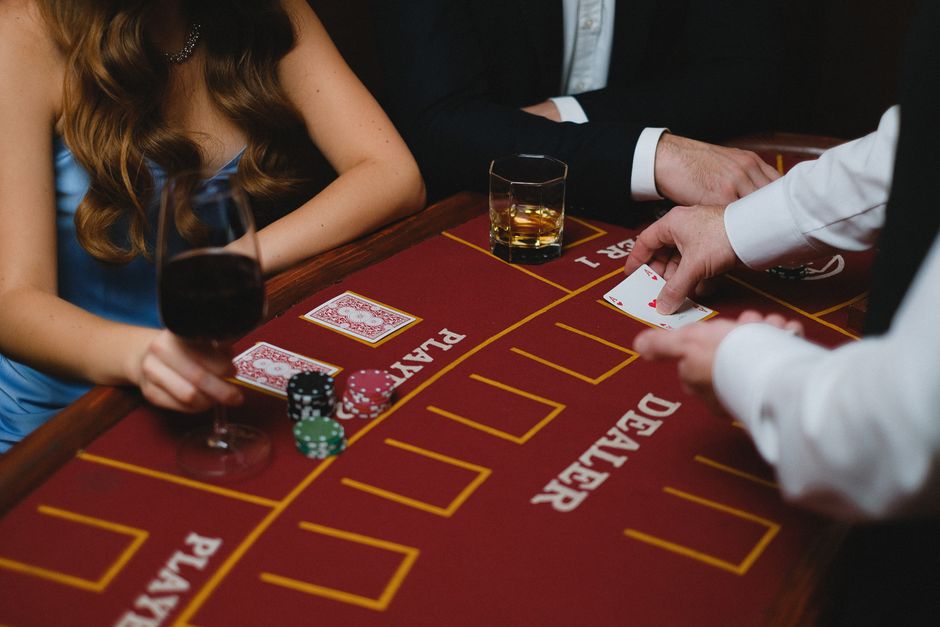
Ask ten slot players what RTP means and you'll get ten slightly different answers, most of them wrong in an expensive way. I've watched people dump hundreds into a machine because it displayed "97% payout" on the glass, convinced they were practically guaranteed to walk out ahead. That's not how any of this works, and understanding why might be the single most valuable hour you spend on your gambling education.
What RTP Actually Measures
Return to Player is a theoretical figure calculated over millions of spins on a specific game. A 96% RTP slot, on average, returns $96 for every $100 wagered — but the phrase "on average" is doing enormous heavy lifting. The variance on a single session dwarfs that 4% house edge. You could run $500 through a 96% slot in twenty minutes and lose all of it, or you could hit a 500x bonus round on spin three and be up massively.
The number matters across volume, not individual sessions. Casinos don't sweat your Tuesday night session. They sweat the tens of thousands of players running millions of spins, where the math plays out with crushing reliability. That's the entire business model.
- A 96% RTP game keeps $4 per $100 wagered over the long run
- A 92% RTP game keeps $8 per $100 — double the house edge
- The difference between 92% and 97% is the difference between a slow bleed and a very slow bleed
Slots, Table Games, and Poker Are Not the Same Beast
This is where a lot of confusion creeps in. Slots are purely mechanical — you spin, the RNG decides, the house edge is baked in and non-negotiable. Fixed odds, fixed math.
Poker is categorically different. In a cash game or tournament against other players, the house doesn't take a side — it takes a rake. That means your profit depends entirely on your skill relative to the table. A strong player can beat the rake and post a positive lifetime expectation. A weak player is effectively paying that strong player's bills. So when someone says "poker has a house edge," they're describing the rake, not a rigged deck.
Blackjack sits in between. Basic strategy can push the house edge under 0.5% on some rule sets, but most casual players make enough mistakes to hand back two or three percent without realizing it.
The Volatility Question Nobody Asks
Here's the thing — two slots with identical 96% RTP can feel and play completely differently. Volatility is the missing half of the picture, and it's arguably more important for a session player than RTP itself. This is explained well on สล็อต.
Low volatility
Frequent small wins, longer sessions, slower bankroll drain. Think classic fruit machines or many of the old NetEnt titles. You'll stay busy, you probably won't hit a life-changing multiplier, and your $100 lasts a full evening.
High volatility
Rare but huge payouts. You might go 400 spins without a meaningful hit, then land a 2,000x bonus. Games like San Quentin or Money Train fall here. The RTP is identical, but the experience is completely different — and if your bankroll isn't sized for the swings, you'll bust before the math has any chance to work in your favor.
My rule: match volatility to your budget. A $50 bankroll on a high-volatility slot is almost always a donation. The same $50 on a low-volatility game gives you hours of play and a fighting chance at ending roughly flat.
Betting Markets and the Vig
Sports betting gets less attention in these conversations, but the same mathematics apply. When a bookmaker prices a two-way market at -110/-110, the underlying odds imply a combined probability above 100% — that gap is the vig, or juice, roughly 4.5% in that example.
Per-bet edge on sports betting is comparable to mid-tier slot RTP. You don't overcome it by picking winners on gut feel. You overcome it by finding soft lines, taking promotions, or exploiting market inefficiencies. Otherwise, the vig quietly eats you alive. This is why sharp bettors obsess over line shopping — moving from -110 to -105 on the same bet trims the vig by roughly a fifth.
- Props and parlays usually carry meatier edges than main markets
- Closing lines are the truest measure of a market's probability
- Long-term profitability hinges on price, not picks
Five Practical Rules That Actually Help
- Look up RTP before you play. Any reputable provider publishes it. If a slot's RTP isn't listed, assume it's mediocre and move on.
- Price the volatility against your bankroll. Divide your gambling budget into at least 100 units. If you can't, the volatility is too high for you on that game.
- Never chase losses on slots. The game doesn't know you're down. Each spin is statistically independent, and the math doesn't care how much you've invested.
- In poker, game select before you sit down. A friendly home-style table beats a table full of pros even if the stakes are identical.
- Treat bonuses carefully. A 100% match with 40x wagering and a 5x max cashout is often worth less than the headline suggests. Read the terms.
Why All Of This Frees You Up
Most people avoid the math because they think it kills the fun. I'd argue the reverse. Once you accept that slots are entertainment with a known, fixed cost — not a wealth-building strategy — you stop making emotionally expensive decisions. You set a budget that reflects the true cost-per-hour of amusement, you choose games whose volatility suits your temper, and you walk away when you've had your value.
The players who suffer most are the ones who treat a 96% RTP as a promise instead of a blueprint. The ones who quietly have a perfectly mediocre, thoroughly enjoyable time are the ones who understand exactly what they're paying for. In iGaming, that's the entire game. Everything else — the flashing lights, the near-misses, the bonus round drumroll — is theater designed to make you forget the number. Know the number. Then enjoy the show.

Joeby Ragpa
This template is so awesome. I didn’t expect so many features inside. E-commerce pages are very useful, you can launch your online store in few seconds. I will rate 5 stars.
ReplyAlexander Samokhin
This template is so awesome. I didn’t expect so many features inside. E-commerce pages are very useful, you can launch your online store in few seconds. I will rate 5 stars.
ReplyChris Root
This template is so awesome. I didn’t expect so many features inside. E-commerce pages are very useful, you can launch your online store in few seconds. I will rate 5 stars.
Reply